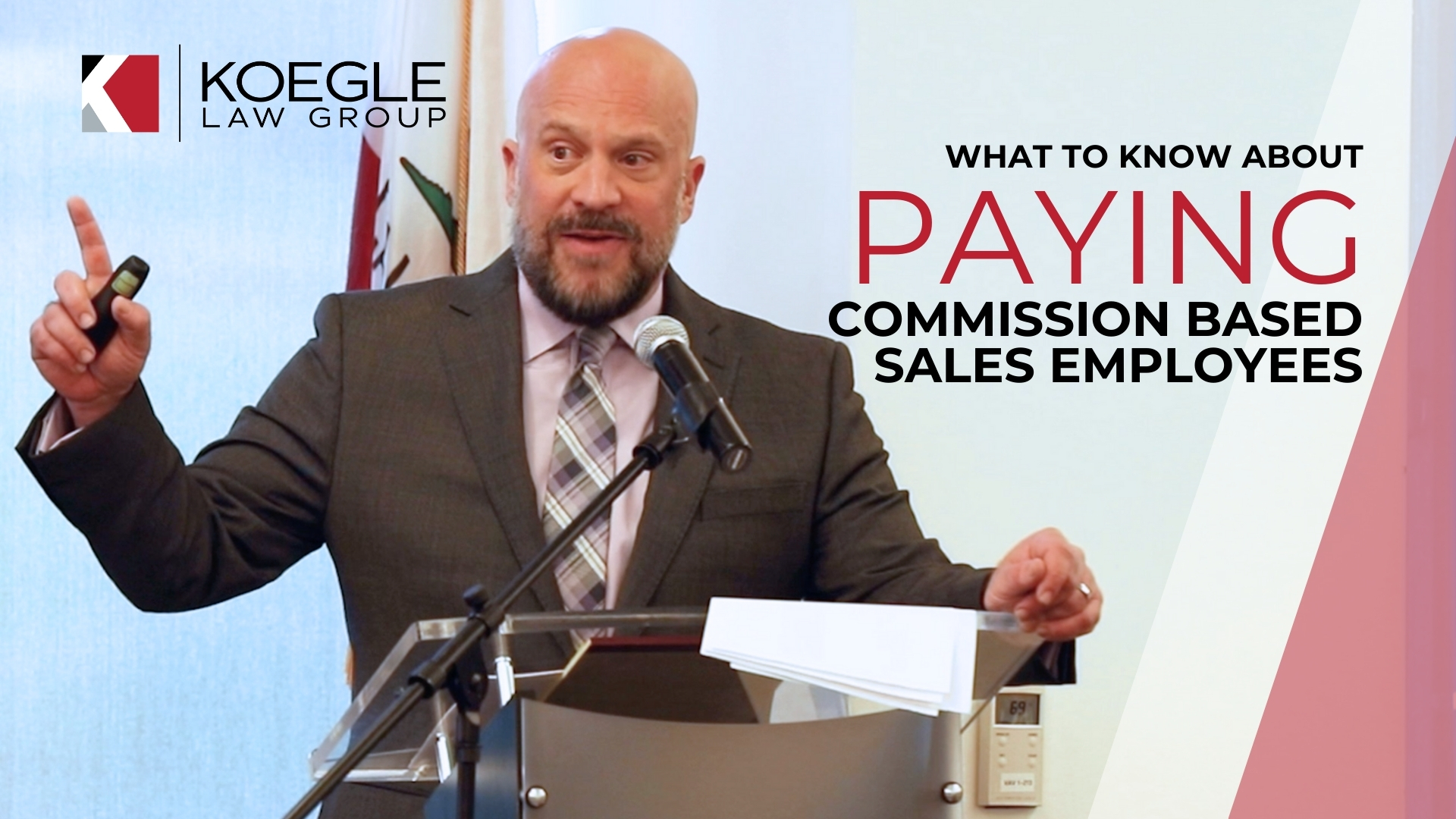
Commission-based compensation can be an effective way to motivate sales teams and drive growth. But in California, it is also one of the most common sources of wage and hour disputes we see, particularly for small to mid-sized businesses that are scaling quickly or operating without dedicated in-house HR support.
Over the last several years, claims involving commissioned sales employees have increased significantly. In many cases, employers are surprised to learn that their existing pay practices, while well-intentioned, don’t fully align with California’s technical requirements.
Understanding the rules before a problem arises can help employers reduce risk, maintain compliant pay practices, and avoid costly disruptions down the line.
Why Commission Pay Is a Common Compliance Pitfall
Commission structures often feel straightforward on the surface. A sale is made, a percentage is paid, and everyone moves on. But California law treats commissioned employees differently than many employers expect, especially when commissions are the employee’s primary or sole form of compensation.
Some of the most common pain points we see include:
- Informal or outdated commission plans that were never memorialized in writing
- Commission terms buried inside offer letters or employment agreements
- Confusion around minimum wage obligations for commission-only employees
- Failure to account for non-productive time and rest breaks
- Pay practices that worked years ago but no longer align with current enforcement trends
These issues rarely surface during day-to-day operations. Instead, they often appear during an employee separation, a wage claim, or an audit… when the business has the least flexibility to respond.
California Requires a Written Commission Agreement
California Labor Code section 2751 requires employers to have a written commission agreement for commissioned employees. This agreement must be separate and distinct from the general employment agreement and must clearly describe how commissions are earned and calculated.
The goal of the law is transparency. Employees should be able to understand, in plain terms, how their compensation works and when commissions are considered earned and payable.
A compliant commission agreement must include several specific elements, including clear definitions and calculation methods. When agreements are vague, incomplete, or combined with other employment documents, employers can face challenges defending their pay practices later.
From a business perspective, a clear commission agreement is not just a compliance tool, it is also a communication tool that helps prevent misunderstandings and disputes before they arise.
Minimum Wage Still Applies For Every Pay Period
One of the most misunderstood aspects of commission pay is the relationship between commissions and minimum wage obligations.
If a commissioned sales employee does not receive a base hourly wage or salary, California law still requires the employer to ensure that the employee earns at least one and a half times the state minimum wage for every hour worked during each pay period.
This calculation includes:
- Productive sales time
- Non-productive time, such as paperwork or administrative tasks
- Time spent taking or following up on leads
- Rest breaks
Employers must evaluate this on a pay-period-by-pay-period basis, not averaged over time. Even a strong sales month does not cure a shortfall in another pay period.
This is an area where many employers are unintentionally exposed. Commission plans may look compliant on an annual basis, but still fall short when reviewed under California’s pay-period rules.
Why These Claims Are Increasing
In recent years, we’ve seen a noticeable increase in claims tied to commissioned employees. This is driven in part by greater employee awareness, but also by evolving enforcement priorities and closer scrutiny of wage and hour practices.
Businesses that rely on commission-heavy roles, including sales, business development, and certain service-based positions, are especially impacted. As companies grow, commission plans that were once informal often fail to scale in a compliant way.
Without periodic review, small gaps can quietly turn into larger problems.
How Proactive Review Can Reduce Risk
For employers, the most effective way to manage commission-related risk is proactive review and not reactive correction.
That often means stepping back to evaluate:
- Whether commission agreements are current, compliant, and clearly written
- How commissions are calculated and documented
- Whether minimum wage requirements are being met every pay period
- How non-productive time and rest breaks are tracked and accounted for
- Whether policies and practices align with how compensation works in reality
This type of review is not about finding fault. It’s about creating clarity, consistency, and confidence in your pay practices.
How Koegle Law Group Supports Employers
At Koegle Law Group, we work with California employers as long-term partners by helping them navigate complex wage and hour rules with practical, business-minded guidance.
We regularly assist business owners and HR teams with:
- Reviewing and updating commission agreements
- Evaluating compensation structures for compliance and clarity
- Identifying risk areas before they lead to disputes
- Providing education and guidance tailored to real-world operations
Our focus is on prevention, communication, and long-term stability so employers can make informed decisions and stay focused on running their businesses.
If your organization uses commission-based pay, or is considering changes to its compensation structure, now is a good time to take a closer look.
Staying informed today can help prevent costly surprises tomorrow.
Contact Koegle Law Group today to schedule a consultation. Let’s make sure your policies protect your business, not put it at risk.
[Contact Us] | [Schedule a Strategy Call] | [Subscribe to Our Newsletter]

This communication may be considered advertising material under the rules of professional conduct governing lawyers in California.