For many employers, I-9 compliance feels administrative, a routine onboarding task completed and filed away.
Until there’s an audit.
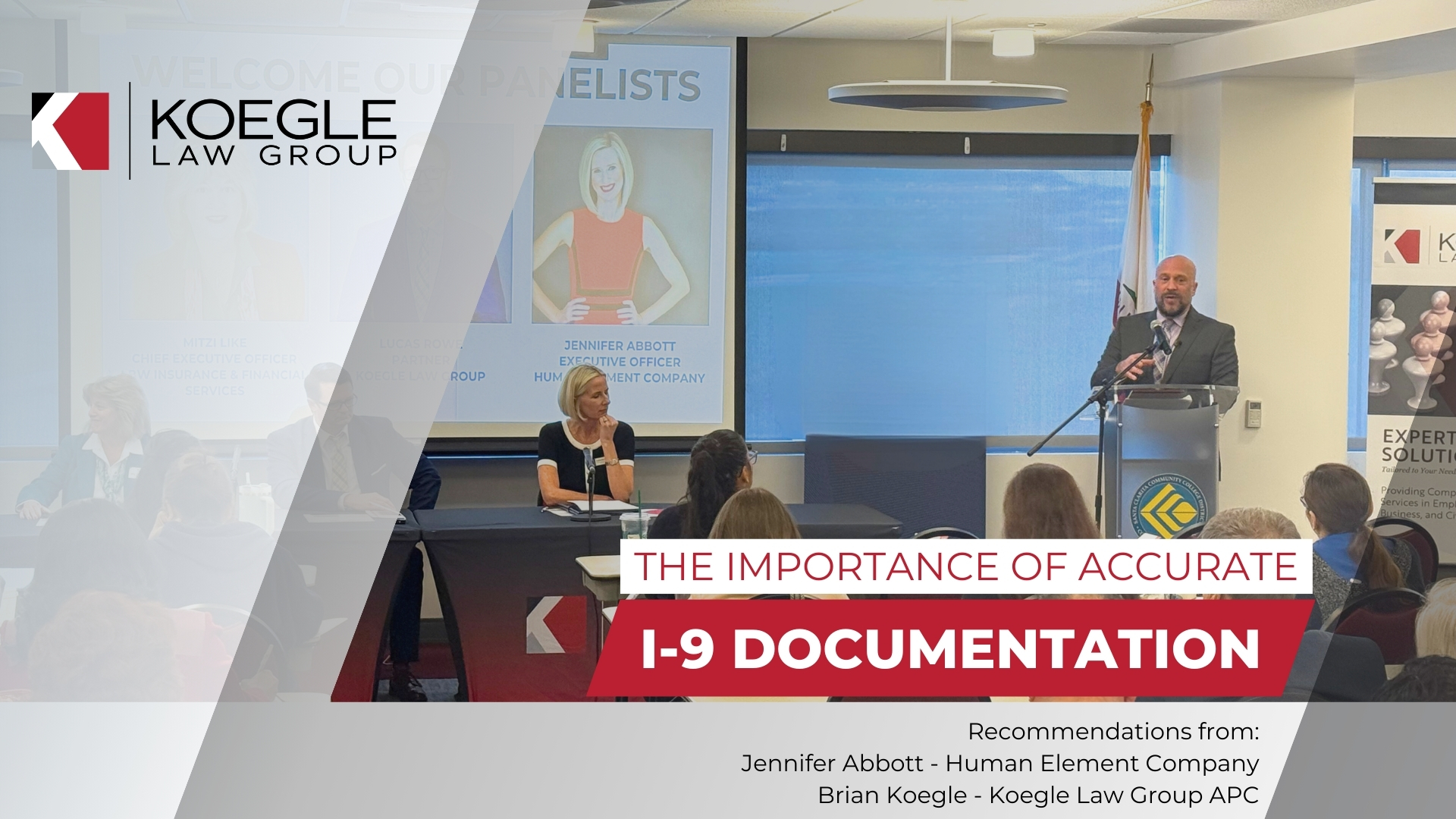
In a recent discussion between Brian Koegle, Founding Partner of Koegle Law Group, and Jennifer Abbott of Human Element Company, the conversation centered on a common reality: most employers believe their I-9s are in order, but few have actually tested that assumption.
The Reality of I-9 Audits: No File Is “Perfect”
Jennifer, who regularly conducts I-9 audits for her clients, offered a candid observation:
“I don’t know that I’ve had one perfect one yet.”
That statement reflects what many employers and HR teams experience. I-9 errors are rarely intentional. Instead, they stem from:
- Rapid hiring growth
- Inconsistent onboarding procedures
- Overreliance on payroll systems
- Delegating compliance tasks without formal training
- Lack of periodic internal review
Small technical mistakes such as missing dates, unchecked boxes, outdated forms, incomplete employer sections can accumulate over time.
And during an inspection, those technical issues matter.
Common I-9 Compliance Gaps Employers Overlook
Through compliance reviews, several recurring issues appear.
1. Missing Employer Review or Countersignature
Electronic payroll and onboarding systems can create a false sense of security. While they streamline document collection, they do not eliminate the employer’s responsibility to properly review and finalize the form.
If a representative does not verify documentation and sign appropriately, the form is incomplete, regardless of the software used.
2. Using Outdated Versions of Form I-9
I-9 forms are updated periodically. Employers must confirm they are using the most current version and paying attention to expiration dates printed on the form.
This is one of the simplest compliance areas to control, yet it is frequently overlooked.
3. Improper Storage of I-9 Forms
One of the strongest operational points raised during the discussion involved document storage.
Brian emphasized that I-9s should not be stored inside regular personnel files. Instead, they should be maintained separately, securely, and in an organized system that allows quick access if requested.
As Brian explained:
“Being ready, being prepared… it’s incumbent upon you to be ready for those type of scenarios.”
When documentation is stored in a secure binder or organized digital file, separate from personnel records, an employer can respond calmly and confidently to a Notice of Inspection.
When documents are scattered across departments or buried in individual files, the process becomes reactive and stressful.
Why Storage and Organization Matter During an ICE Inspection
If ICE issues a Notice of Inspection, employers are typically required to produce I-9 documentation within a specific timeframe.
Prepared employers can:
- Access forms immediately
- Demonstrate organized compliance systems
- Reduce internal disruption
- Avoid scrambling under pressure
Preparation communicates professionalism and internal control.
The Importance of Periodic Internal Reviews
I-9 compliance is not a “complete it once and forget it” obligation.
Periodic internal audits help employers:
- Identify technical errors early
- Correct permissible mistakes properly
- Remove I-9s for former employees in accordance with retention rules
- Confirm consistent use of current forms
- Ensure onboarding procedures remain aligned with legal requirements
A twice-annual review is a practical cadence many employers adopt to maintain order and reduce risk.
For growing businesses, especially those without full HR departments, these scheduled reviews create structure and accountability.
Can I-9 Errors Be Corrected?
In some cases, technical errors may be corrected properly if identified proactively. However, corrections must follow specific protocols. Improper alterations can create additional compliance concerns.
This is why internal audits, conducted before an inspection, are so valuable.
Proactive review provides clarity, control, and an opportunity to address issues methodically rather than under deadline pressure.
How Koegle Law Group Supports Employers
At Koegle Law Group, we approach I-9 compliance as part of a broader proactive employment strategy.
We work with California employers to:
- Conduct internal I-9 audits
- Review onboarding procedures
- Advise on proper storage and retention systems
- Train HR and management teams
- Develop compliance checklists and review protocols
- Provide guidance if an ICE inspection occurs
Our goal is not simply to address isolated documentation issues, but to strengthen the systems behind them.
Employment compliance should create stability, not uncertainty.
Frequently Asked Questions (FAQ)
How long must employers retain I-9 forms?
Generally in California, employers must retain Form I-9 for either three years after the date of hire or one year after employment ends, whichever is later. Employers should confirm retention timelines with counsel to ensure compliance.
Should I-9s be stored in personnel files?
Best practice is to store I-9s separately from personnel files in a secure, access-restricted location. This protects sensitive personal information and allows for efficient production during an inspection.
How often should employers review I-9 documentation?
While not legally mandated at a specific interval, we recommend employers conduct internal reviews at least twice per year to identify correctable technical errors and confirm proper retention practices.
Can electronic payroll systems ensure I-9 compliance?
Electronic systems can assist with document collection, but the employer remains responsible for proper review, verification, completion, and retention of the form.
Final Thoughts
I-9 compliance is rarely about intentional wrongdoing. More often, it reflects gaps in systems, oversight, or training. Preparation is the difference between a confident response and a reactive scramble.
For California employers, building structured documentation practices, reviewing them periodically, and storing records securely, is a practical step toward long-term business stability.
If your organization would benefit from a proactive I-9 compliance review or broader employment audit, Koegle Law Group partners with employers to create thoughtful, sustainable strategies aligned with current legal requirements.
Contact Koegle Law Group to schedule a consultation and get clarity on how we can help guide your business the right way.
[Contact Us] | [Schedule a Strategy Call] | [Subscribe to Our Newsletter]

This communication may be considered advertising material under the rules of professional conduct governing lawyers in California.